Adults 21+ • Educational information only • Not medical advice
Terpenes 101

Why it
smells
like that.

Terpenes are the aromatic compounds behind every scent in the jar — the gassy, the citrus, the pine, the funk. They're the reason two flowers with identical THC numbers can feel like completely different products.

Buy the nose, not the number.
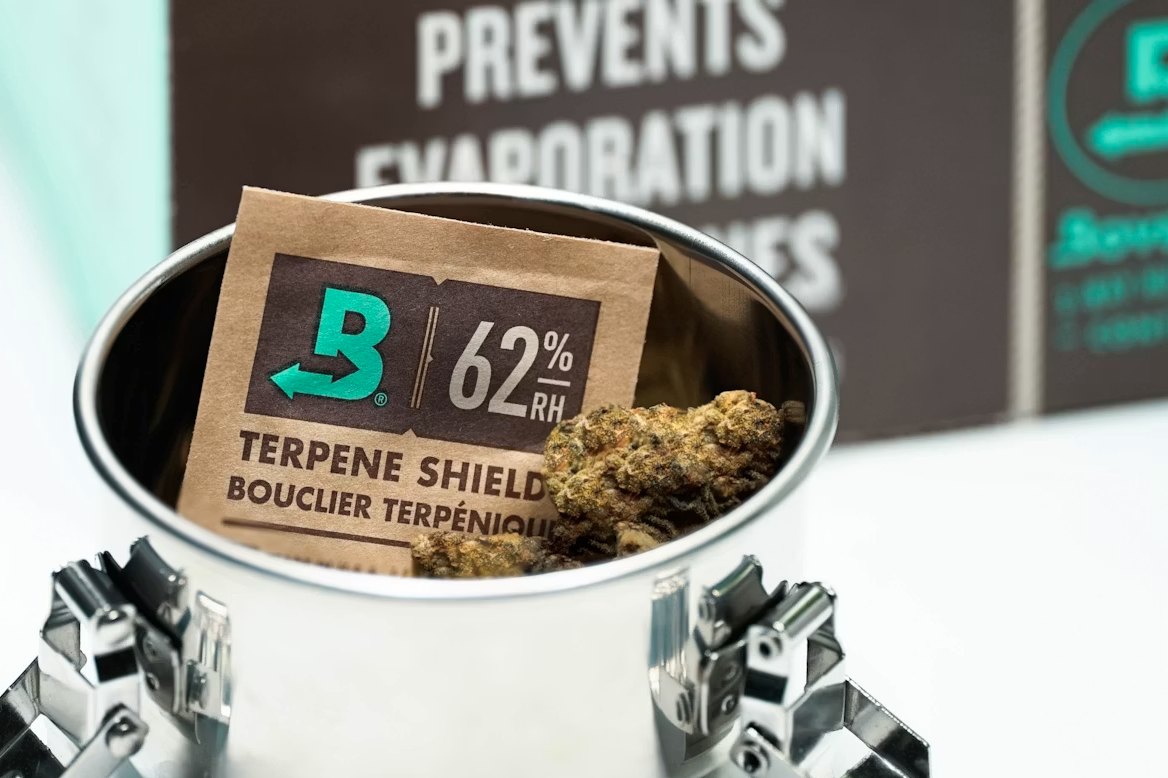
Hemp flower in a sealed steel jar with a humidity control pack, kept at 62% relative humidity to slow terpene loss
Sealed, humidity-stabilized storage — how you keep the smell you paid for · Photo: 2H Media / Unsplash

Start here: what a terpene actually is

Terpenes are small, oily, volatile molecules that plants make to smell like something. Cannabis and hemp make a lot of them, and they live in the same sticky resin glands as the cannabinoids.

1

They are the smell

Over 150 terpenes have been identified in cannabis, though only a dozen or so show up in amounts big enough to notice. Lemon, pine, pepper, lavender, diesel, mango — that's terpenes, not THC. THC and CBD are essentially odorless.

2

Not unique to cannabis

The same molecules are in food and everyday plants. Limonene is in lemon peel. Myrcene is in mango and hops. Pinene is in pine needles and rosemary. If you've smelled a spice rack, you already know terpenes.

3

They're fragile

Heat, light, oxygen and time all drive terpenes off. That's why fresh, cold-stored, solventless product smells louder than the jar that sat in a hot car — and why how you store and heat it matters as much as what you bought.

The honest state of the science.

Terpenes clearly drive aroma and flavor — that part isn't controversial. Their effect on how a product feels is a genuinely active research question, and much of the popular "terpene X does Y" material outruns the evidence. Most studies to date are lab or animal work at concentrations well above what you'd inhale. Below, "commonly reported as" means exactly that: what consumers and sellers tend to describe, not a proven effect and not a medical claim.

The Aroma Wheel

Eight families • start with the smell you already like

Follow
your
nose
8 aroma families
Earthy / MuskyDamp soil, cardamom, ripe mango, old-school skunk. Usually myrcene-forward.
CitrusLemon peel, orange zest, grapefruit pith. Limonene, sometimes with ocimene.
Pine / ForestChristmas tree, rosemary, fresh-cut fir. Alpha- and beta-pinene.
Pepper / SpiceCracked black pepper, clove, cinnamon warmth. Caryophyllene.
FloralLavender, rose, violet, soft perfume. Linalool, bisabolol, nerolidol.
Herbal / HoppyFresh hops, sage, green tea, dry basil. Humulene and terpinolene.
Sweet / FruityBerry, tropical candy, stone fruit, cream. Ocimene plus esters and fruity thiols.
Gas / FunkDiesel, solvent, rubber, savory garlic. Sulfur compounds plus a heavy terpene base.

Note on gas and funk: the loudest "gassy" and "garlic" smells aren't purely terpenes. Trace sulfur compounds (VSCs) do much of that work, at concentrations thousands of times smaller than the terpenes around them. Terpenes build the body of the smell; sulfur adds the punch.

The big ten

The terpenes you'll actually see listed on a lab panel, ranked roughly by how often they show up as the dominant one. Boiling points are at standard pressure and are useful as a rough guide only.

MY

Myrcene

β-myrcene • "MEER-seen"
EarthyMuskyRipe mangoClove
Smells likeDamp earth and overripe fruit — the backbone of classic "skunk"
Also found inMango, hops, lemongrass, thyme, bay laurel
Reported asHeavy, relaxing, couch-leaning
Typical shareOften the #1 terpene; can exceed 50% of the total
333°F167°C · monoterpene
Blue Dream · OG Kush · Grape Ape · Mango Haze
LI

Limonene

D-limonene • "LIM-oh-neen"
Lemon peelOrange zestGrapefruitClean
Smells likeFresh citrus rind — bright, sharp, a little soapy-clean
Also found inCitrus peel, juniper, peppermint; common in cleaning products
Reported asBright, mood-lifting, sociable
Typical shareSecond-most common dominant terpene
349°F176°C · monoterpene
Wedding Cake · Super Lemon Haze · Do-Si-Dos
CA

Caryophyllene

β-caryophyllene • "carry-OFF-uh-leen"
Black pepperCloveWarm woodFunk
Smells likeCracked peppercorn and clove; adds warmth under gassy strains
Also found inBlack pepper, cloves, cinnamon, basil, oregano
Reported asWarming, grounding, body-forward
Worth knowingThe odd one out — the only common cannabis terpene shown to bind CB2 receptors with meaningful affinity, which makes it technically a dietary cannabinoid too
504°F262°C · sesquiterpene
GSC · Gelato · Bubba Kush · Sour Diesel
PI

Pinene

α- & β-pinene • "PIE-neen"
Pine needleRosemaryFirSharp
Smells likeA Christmas tree lot — crisp, resinous, almost cold
Also found inPine needles, rosemary, sage, conifer resin, turpentine
Reported asAlert, clear-headed, "bright"
Worth knowingThe most widely distributed terpenoid in nature — and the lowest-boiling of the ten below
311°F155°C · monoterpene
Jack Herer · Dutch Treat · Blue Dream · Trainwreck
TP

Terpinolene

"ter-PIN-oh-leen"
Fresh herbAppleLilacPine-citrus
Smells likeHard to pin down — herbal, faintly floral, green apple over pine
Also found inNutmeg, cumin, apples, lilac, tea tree
Reported asEnergetic, heady, buzzy
Typical shareRarely dominant, but unmistakable when it is — the classic "Haze" signature
367°F186°C · monoterpene
Jack Herer · Dutch Treat · Golden Goat · Ghost Train Haze
LN

Linalool

"lin-AL-oh-ol"
LavenderRoseSoft spicePerfume
Smells likeLavender sachet with a hint of citrus — the "perfumey" note in dessert strains
Also found inLavender, coriander, birch, mint; a mainstay of the fragrance industry
Reported asCalming, soft, mellow
Typical shareUsually a minor player, but very easy to smell at low levels
388°F198°C · monoterpene
Do-Si-Dos · LA Confidential · Kosher Kush · Zkittlez
HU

Humulene

α-humulene • "HYOO-myoo-leen"
HopsDry herbWoodyBitter
Smells likeCracking open a bag of hops — dry, bitter, faintly woody
Also found inHops, coriander, clove, ginseng, sage
Reported asDry, earthy, low-key
Worth knowingTravels with caryophyllene — they're structural cousins and usually appear together
~518°F~270°C · sesquiterpene
GSC · Headband · White Widow · Sour Diesel
OC

Ocimene

"OSS-ih-meen"
SweetTropicalBasilGreen
Smells likeSweet and grassy at once — mango skin, basil, warm hay
Also found inBasil, mint, parsley, orchids, mangoes, kumquats
Reported asUplifting, light, "fruity-forward"
Worth knowingConsistently among the first notes lost during drying and curing, which is why "live" material tastes so much more tropical than the same plant dried
351°F177°C · monoterpene
Look for it named on the panel — fruit-forward cultivars often list it, but rarely as the dominant
BI

Bisabolol

α-bisabolol • "by-SAB-oh-lol"
ChamomileHoneySoft floralNutty
Smells likeChamomile tea with a nutty, honeyed edge — gentle, never sharp
Also found inGerman chamomile, candeia tree; widely used in skincare
Reported asSoothing, soft, unobtrusive
Typical shareA heavy sesquiterpene — sticks around long after the citrus notes have gone
572°F+300°C+ · sesquiterpene
Reported as a minor contributor in CBD-rich chemovars like ACDC and Harle-Tsu
NE

Nerolidol

"neh-ROL-ih-dol"
Fresh barkJasmineAppleWoody
Smells likeTree bark and orange blossom — woody-floral, slightly waxy
Also found inJasmine, tea tree, lemongrass, ginger, neroli
Reported asCalm, heavy, sedating
Worth knowingStudied as a skin-penetration enhancer, which is why it turns up in topical formulations
529°F276°C · sesquiterpene
Rarely more than a trace — worth spotting on a panel rather than shopping for by strain name

Find It By Smell

Reverse lookup • you know what you like, now name it

If the jar smells like the left column, look for the terpene in the middle
What you smellLikely terpeneAsk forAvoid if you want the opposite
Lemon, grapefruit, cleanerLimoneneLemon, Zest, Sour, Tangie linesHeavy Kush and Purple lines
Wet dirt, mango, skunkMyrceneOG, Kush, Grape, Blueberry linesTerpinolene-forward Haze lines
Pine, rosemary, forestPineneJack, Haze, Trainwreck linesDessert and Cake lines
Black pepper, cloveCaryophylleneCookies, Gelato, Diesel linesBright citrus-only profiles
Lavender, perfume, soapLinaloolDo-Si-Dos, Zkittlez, LA ConfidentialGassy and funky profiles
Hops, dry sage, beerHumuleneWhite Widow, Headband linesFruit-candy profiles
Green apple, lilac, teaTerpinoleneHaze, Golden Goat, Dutch linesHeavy indica-leaning Kush lines
Tropical candy, berryOcimene, esters, fruity thiols"Live" anything — Strawberry, Pineapple, Runtz linesOld or heat-stressed product
Chamomile, honey, nuttyBisabololCBD-rich chemovars — ACDC, Harle-TsuSharp, sour profiles
Diesel, rubber, garlicSulfur compounds + heavy terpenesGMO, Sour, Chem, Gas linesAnything sitting on a warm shelf

Heat is the whole ballgame

Every terpene has a temperature at which it boils off. Run hot and you scorch past the delicate stuff before you ever taste it — which is why low-temp dabs taste enormous and high-temp dabs taste like nothing but harshness. The clean split below is the part worth remembering: the light, bright terpenes all boil in one narrow band, and the heavy base notes sit far above it.

Boiling points at standard atmospheric pressure (°F)

Pinene mono
311°F155°C
Myrcene mono
333°F167°C
Limonene mono
349°F176°C
Ocimene mono
351°F177°C
Terpinolene mono
367°F186°C
Linalool mono
388°F198°C
Caryophyllene sesqui
504°F262°C
Humulene sesqui
~518°F~270°C
Nerolidol sesqui
529°F276°C
Bisabolol sesqui
572°F+300°C+
0°F155°F310°F465°F620°F
Monoterpenes — the top notesSmaller, lighter molecules: pinene, myrcene, limonene, ocimene, terpinolene, linalool. All boil between roughly 310°F and 390°F. These carry the citrus, pine and bright fuel notes — and they're the first thing you lose to warmth, air and time.
Sesquiterpenes — the base notesHalf again as large: caryophyllene, humulene, nerolidol, bisabolol. All boil above about 500°F. They're the pepper, hops, wood and chamomile backbone, they survive far longer in an aging jar, and they're what's left once the bright stuff has gone.
Why this chart won't match the one you've seen everywhere

The terpene boiling-point chart that circulates all over cannabis media lists caryophyllene at 266°F, humulene at 222°F and bisabolol at 307°F. Those are real measurements — but they were taken under vacuum, at a few millimeters of mercury, and then reprinted as though they were atmospheric. At normal pressure every sesquiterpene boils higher than every monoterpene, not lower. The popular chart has the order essentially backwards, and we'd rather be right than familiar.

Low: 450–550°F nailCoolest, most flavorful dabs. You volatilize the full monoterpene range plus a good share of the heavier notes. Smaller visible vapor, biggest taste. Best for hash rosin.
Mid: 550–650°F nailThe common compromise. Bigger clouds, noticeably less nuance — you're pushing the light top notes hard and starting to degrade them rather than evaporate them.
High: 700°F+ nailHarsh, ashy, wasteful. Well past vaporizing and into combustion and thermal breakdown. Nothing left to taste.

Read the fine print: nail temperature is not vapor temperature — the material sees considerably less than the surface reads, and a mixture never behaves like a set of pure compounds boiled one at a time. Boiling points also shift with purity and measurement method. Treat all of this as direction, not dosage. Separately: the "THC boils at 315°F" figure you'll see quoted alongside these charts is a vaporization onset from vape literature, not an atmospheric boiling point — THC's true 1-atm boiling point isn't well established, which is why we've left it off.

Flower, hash & rosin: who keeps the smell?

Total terpene content is the single best predictor of how loud a product will taste. Here's roughly where each format lands — and why solventless keeps more of it.

Typical total terpene content by weight

Dried flower
1–3%
Exceptional flower
3%+
Dry sift / kief
3–6%
Ice water hash
4–8%
Live hash rosin
4–10%
Distillate (stripped)
under 1% — terpenes reintroduced later, if at all
Highest terpene retention
Remainder: cannabinoids, plant material, moisture

Ranges are broad industry norms and vary enormously by cultivar, harvest timing, drying, and freshness. Lab panels for the specific batch beat generalizations every time.

Why solventless wins on flavor

Ice water and heat-and-pressure extraction never use a solvent that has to be purged with heat and vacuum. Less heat means fewer terpenes driven off. "Live" material — frozen right at harvest instead of dried — skips the drying stage where the most volatile notes escape.

Hemp vs. cannabis terpenes

Chemically, no difference. Hemp and cannabis are the same species; the legal line is drawn on THC content, not aroma. A hemp-derived hash rosin can carry the same terpene profile as its high-THC counterpart — same plants, same terpene genetics. Note that the federal hemp definition tightens on November 12, 2026, moving to a total-THC standard with a per-container cap, so what qualifies as hemp is about to narrow considerably.

Botanical & "cannabis-derived" terps

Some products add terpenes back after extraction — either botanical (from other plants) or cannabis-derived. Neither is inherently bad, but reintroduced blends rarely match the original profile's complexity. If a label says "botanical terpenes," the flavor was formulated, not preserved.

The entourage effect, carefully

The popular idea: cannabinoids and terpenes together produce something different from either alone. It's plausible, it's widely believed, and it's still being worked out.

CannabinoidsTHC, CBD, CBG and others — the compounds doing the heavy pharmacological lifting
+
TerpenesAroma, flavor, and possibly some modulation of the overall experience
=
The experienceWhat people mean when they say two 25% THC products feel nothing alike
Where the evidence actually stands

Terpenes definitely shape aroma and flavor, and aroma alone measurably shapes how people rate an experience — expectation is a real effect, not a fake one. Direct pharmacological synergy is thinner ground: some lab studies find terpenes influencing cannabinoid receptor activity, others find no meaningful effect at realistic inhaled concentrations. The practical takeaway holds either way: the aroma profile predicts your enjoyment better than the THC number does.

How To Read A Terpene Panel

Lab reports, decoded • what the percentages mean

Terpene ProfileSample panel · batch #ES-0412
β-Myrcene — earthy, musky2.41%
D-Limonene — citrus peel1.88%
β-Caryophyllene — pepper, clove1.12%
α-Humulene — hops, dry herb0.44%
Linalool — floral, lavender0.31%
α-Pinene — pine0.19%
Ocimene — sweet, tropical0.09%
Others below reporting limitND
Total terpenes6.44%
1 · Look at the total firstTotal terpene content is the fastest quality signal there is. For hash rosin, over 4% is respectable and over 6% is excellent. For flower, over 2% is good and over 3% is strong.
2 · Then the top threeThe top three almost always account for most of the profile and tell you what it'll actually smell like. Everything below about 0.1% is real but very hard to pick out.
3 · "ND" means not detectedNot detected at the lab's reporting limit — not necessarily zero. Different labs use different limits and different panel sizes, so totals aren't perfectly comparable between labs.
4 · Check the dateTerpene content only goes down after testing. A panel from eight months ago describes a product that smelled better eight months ago.
5 · Ratios beat absolutesA 3% total that's evenly spread across six terpenes tastes more complex than a 4% total that's almost entirely myrcene. Look at the shape of the profile, not just the sum.

Keep the smell you paid for

Terpenes are volatile by definition. Four things destroy them, and all four are avoidable.

Kill the lightUV degrades terpenes and cannabinoids alike. Opaque or amber glass, in a cupboard. Clear jars on a windowsill are the fastest way to ruin good product.
Keep it coolCool and stable beats cold and fluctuating. For rosin, the fridge or freezer in an airtight container genuinely helps — let it come to room temperature before opening to avoid condensation.
Limit airOxygen degrades terpenes and headspace is the enemy. Right-size the container, keep it sealed, and stop opening the jar to smell it every day.
Buy fresher, buy smallerNothing preserves terpenes like a recent pack date. Buying a smaller amount more often beats a bulk jar you'll finish in six months.

Four things you'll hear that aren't quite right

The claim

"Indica versus sativa tells you how it'll feel."

Closer to the truth

Those labels describe plant shape and market lineage far more reliably than effects. Chemical profile — cannabinoids plus terpenes — is a much better predictor, which is why two "indicas" can feel completely different.

The claim

"Eating a mango before you smoke boosts your high, because myrcene."

Closer to the truth

A fun story with no solid human evidence behind it. The myrcene in one mango is a tiny dose, and there's no established mechanism operating at that level. Harmless to try; don't expect much.

The claim

"Higher terpenes mean higher potency."

Closer to the truth

They're different measurements. High-terpene product usually tastes better and is often better grown and better handled — but terpene percentage isn't THC percentage, and in extracts the two compete for the same weight.

The claim

"Terpenes are safe because they're natural and in food."

Closer to the truth

Safe to eat isn't the same as safe to inhale — that distinction matters. Concentrated terpenes can irritate skin and airways, and inhalation safety data for isolated terpenes at high concentrations is limited. Something being food-grade says nothing about vaporizing it.

Straight answers

How many terpenes should I actually care about?
Ten or so. Cannabis produces well over 150, but the ones above cover the overwhelming majority of what appears on lab panels at levels a person can smell. Learn myrcene, limonene, caryophyllene and pinene first — those four will explain most of what's in front of you.
Will terpenes get me high?
No. Terpenes aren't intoxicating on their own at the amounts present in cannabis or hemp. They shape aroma and flavor, and may influence the character of an experience, but the intoxication comes from cannabinoids.
Do terpenes show up on a drug test?
No. Standard tests look for THC metabolites. Terpenes aren't screened for and aren't a factor.
Why does the same strain name smell different from two shops?
Because a name isn't a genetic guarantee. The same cutting grown in different conditions, harvested at a different point, and dried differently produces measurably different terpene profiles — and plenty of names get reused across genuinely unrelated plants. Trust the lab panel and your nose over the label.
What does "live" mean on a label?
The plant was frozen immediately after harvest rather than dried and cured first. Drying is when the most volatile terpenes — ocimene especially — escape, so freezing captures a fresher, brighter profile. "Live rosin" and "live resin" both refer to this starting material.
Can I add terpenes to something myself?
You can buy terpene blends, but concentrated terpenes are potent and irritating, need serious dilution, and the inhalation safety picture is incomplete. It's easy to make something taste worse and harsh. Buying product that kept its own terpenes is the better path.
Does a strong smell mean high quality?
It's a good signal, not proof. Loud aroma usually means fresh, well-grown, well-stored product. But some genuinely excellent cultivars are subtle, and added botanical terpenes can make mediocre product smell loud. Smell plus a recent lab panel is the reliable combination.

Now go shop with your nose.

Our weekly board lists flavor profiles next to prices, so you can pick by aroma family instead of guessing from a THC number.

See This Week's Menu ↗ COAs 101 ↗ Legal 101 ↗
Educational information only. This page is for adults 21 and over. Nothing here is medical advice, a diagnosis, a treatment recommendation, or a claim that any product prevents, treats or cures any condition. Statements about how terpenes are "reported" or "described" reflect common consumer and industry descriptions, not established clinical effects. Research on terpene pharmacology is early and in several areas contested.

Boiling points are approximate values at standard atmospheric pressure and vary with pressure, purity and measurement method; they are offered as a general guide to heat sensitivity, not as precise operating instructions. Terpene content ranges are broad industry norms and vary widely by cultivar, cultivation, harvest timing, processing and age — always check the certificate of analysis for the specific batch. Strain associations are typical rather than guaranteed; the same name from different growers can carry very different chemistry.

Concentrated terpenes are potent irritants and are not intended for undiluted use or inhalation. Food-grade status does not imply inhalation safety. Product legality, THC limits and shipping eligibility differ by jurisdiction and change frequently — verify current law where you live before purchasing. If you are pregnant, nursing, taking medication or managing a health condition, talk to a qualified clinician before using cannabis or hemp products.